by Samuel P. Huntington
Samuel P. Huntington’s The Clash of Civilizations and the Remaking of World Order (1996) is a groundbreaking book that explores how cultural and religious identities will shape global politics in the post-Cold War world. Huntington argues that the old divisions based on ideology (like democracy vs. communism) are no longer the main drivers of conflict. Instead, he says, the world is now divided into major civilizations, and future conflicts will arise along the cultural and religious lines that separate them.
Part One: A World of Civilizations
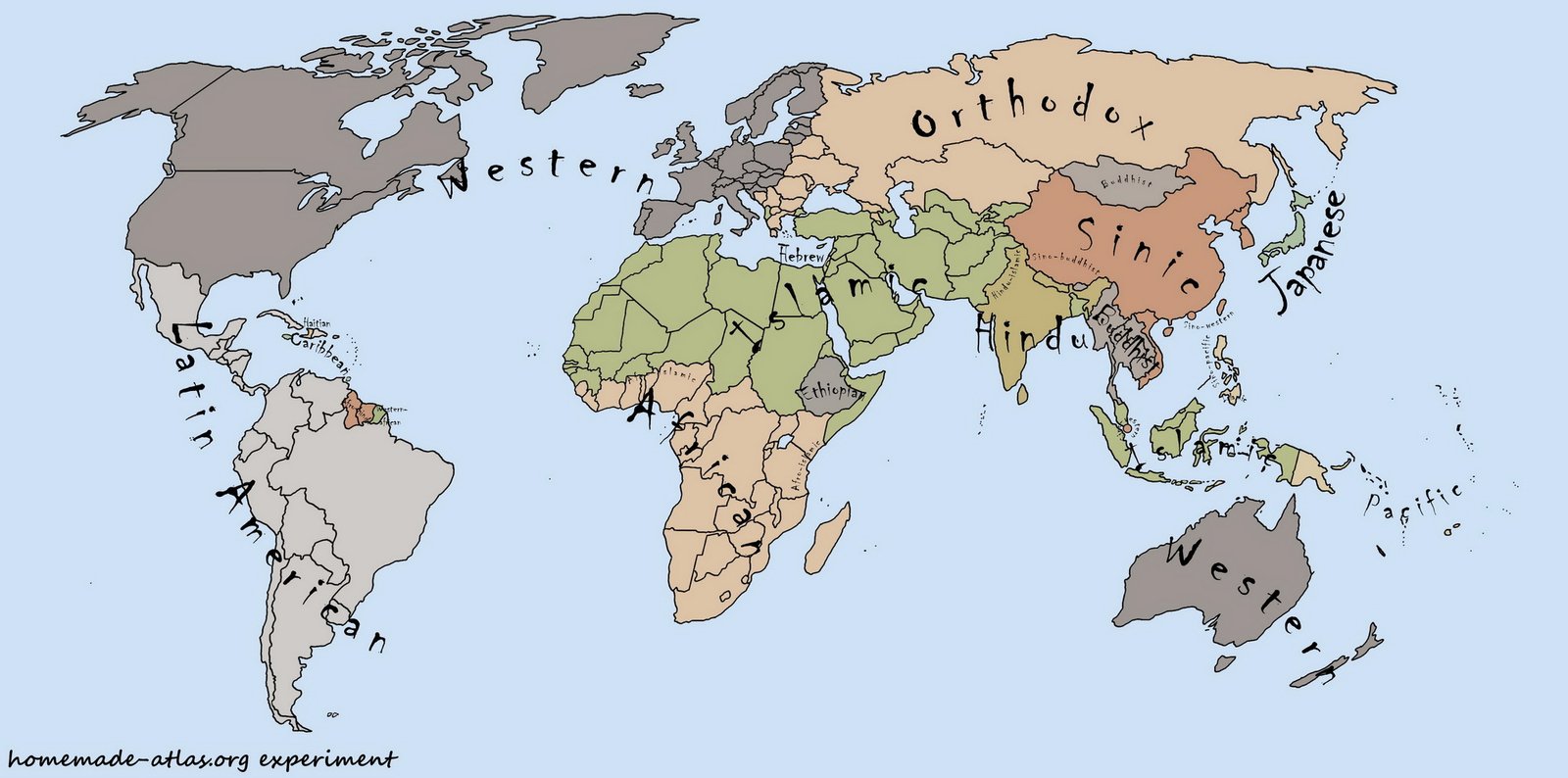
Huntington begins by rejecting older ways of understanding global politics, like the Cold War’s focus on ideology. He says we need a new way to see the world—a “civilization paradigm.” He divides the world into eight major civilizations:
- Sinic: Includes China and Chinese-influenced cultures in Southeast Asia.
- Japanese: A unique culture distinct from the rest of Asia.
- Hindu: Centered in India.
- Islamic: Spread across the Middle East, North Africa, and parts of Asia, with many subgroups like Arab, Turkic, and Persian.
- Orthodox: Centered in Russia, separate from Western Christianity.
- Western: Includes Europe, North America, and other Westernized countries.
- Latin American: Central and South America, with a shared Catholic and authoritarian history.
- African: While diverse, Huntington argues that a sense of African identity is growing.
Huntington explains that civilizations have always interacted, but in the past, Western civilizations dominated through technology and colonization. Now, however, influence flows in all directions. Western culture is no longer the only global force, and the idea of a single, universal civilization is unrealistic. Instead, the world is becoming more modern but less Western.
Part Two: The Shifting Balance of Civilizations
Huntington argues that Western power is declining, though slowly. He points out three key trends:
- The West’s dominance is fading, but this decline is gradual and uneven.
- Religion is becoming more important in global politics, filling the void left by the end of ideological conflicts like the Cold War.
- Non-Western civilizations, especially in Asia and the Islamic world, are rising in power and influence.
For example, Asian countries like Japan, South Korea, and China have modernized economically without adopting Western values. Meanwhile, Islamic societies are experiencing a religious resurgence, driven by factors like population growth, economic struggles, and a rejection of Western culture.
Part Three: The Emerging Order of Civilizations
After the Cold War, countries faced an identity crisis. Huntington says they are now grouping together based on shared culture, religion, and history. Regional organizations like the European Union (EU) and the Association of Southeast Asian Nations (ASEAN) reflect this trend. He also introduces the idea of “torn countries”—nations like Russia, Turkey, and Mexico that are struggling to define their cultural identity.
Huntington describes civilizations as being centered around powerful “core states,” like France and Germany in Europe. However, he notes that the Islamic world lacks a core state, which he believes hinders its development and stability.
Part Four: Clashes of Civilizations
Huntington predicts that future conflicts will occur along the “fault lines” between civilizations. He identifies three major sources of tension between the West and other civilizations:
- Military Power: The West’s efforts to maintain military superiority.
- Cultural Values: The promotion of Western ideals like democracy and human rights.
- Immigration: Western restrictions on non-Western immigrants.
He specifically highlights the potential for conflict between:
- Islam and the West: Huntington sees a long history of conflict between these two civilizations, fueled by factors like population growth, religious resurgence, and resentment of Western dominance.
- China and the West: As China grows economically and militarily, Huntington predicts it could clash with the U.S. and its allies.
Huntington also discusses “fault line wars”—prolonged, violent conflicts between groups from different civilizations, often rooted in religious differences. Examples include the Soviet-Afghan War and the Gulf War, which he sees as early signs of civilizational clashes.
Part Five: The Future of Civilizations
In the final section, Huntington considers whether the West can maintain its power in the face of rising non-Western civilizations. He warns that the West faces both external challenges (like the rise of China and Islamic resurgence) and internal challenges (like the erosion of Western values and multiculturalism).
Huntington argues that the West must adapt to this new world order by:
- Strengthening its own cultural identity.
- Avoiding unnecessary conflicts with other civilizations.
- Accepting that a multicultural world is inevitable.
He concludes that the greatest threat to global peace is a clash between major civilizations, particularly between the West and Islam or the West and China. To prevent this, the West must learn to coexist with other civilizations rather than trying to dominate them.
Key Takeaways
Huntington’s The Clash of Civilizations is a provocative and influential book that challenges the idea of a unified, globalized world. Instead, he sees the future as one of cultural and religious divisions, with conflicts arising along the lines where civilizations meet. While his ideas have been criticized for being overly simplistic or pessimistic, they remain highly relevant in today’s world, where issues like religious extremism, rising nationalism, and tensions between the West and China continue to shape global politics.
Huntington’s work reminds us that culture and identity are powerful forces in human history—and that understanding these forces is key to navigating the complexities of the 21st century.